
HomeMethodsTemplatesExamplesAboutContact
Core Framework

The Habit Loop Explained

Every habit — good or bad — follows the same three-step neurological loop. Master this loop and you gain control over your behaviour at the deepest level.

Click Each Stage to Explore

The habit loop is a three-part cycle that the brain uses to encode and automate behaviour.

CUE
🔄
ROUTINE
REWARD

⚡ The Cue

A trigger that tells your brain to initiate a behaviour. Cues can be a time of day, a location, an emotional state, another person, or a preceding action. Your brain is constantly scanning for cues that predict rewards.

🔄 The Routine

The behaviour itself — physical, mental, or emotional. This is the habit you want to build or change. The routine is what most people focus on, but without understanding the cue and reward, changing it is extremely difficult.

✨ The Reward

What the brain gets out of the routine. Rewards can be physical (the buzz of caffeine), emotional (the relief of stress), or social (approval from others). The reward is what teaches the brain whether this loop is worth remembering.

Understanding Each Part

Part 01

The Cue

Cues come in five categories: time, location, emotional state, other people, and immediately preceding action. Identifying your exact cue is the first step to redesigning any habit.

Example: You feel stressed (emotional state cue) → reach for your phone
Part 02

The Routine

The routine is the most malleable part of the loop. Once you've identified the cue and reward, you can experiment with inserting a new, healthier routine that delivers the same reward.

Example: Instead of scrolling, try 5 deep breaths to address the stress
Part 03

The Reward

Not all rewards are obvious. The craving underlying the reward is what your brain actually wants — often relief, stimulation, connection, or a sense of accomplishment.

Example: Deep breathing provides the same cortisol relief as scrolling
Overcoming bad habits through habit loop redesign

Redesigning Bad Habits

You cannot erase a habit. But you can redesign it. The golden rule of habit change: keep the same cue and reward — change only the routine.

  • 1
    Identify the cue: When does the bad habit happen? What triggers it?
  • 2
    Identify the reward: What craving does the habit satisfy? (Often not what you think.)
  • 3
    Experiment with alternatives: What other routine could satisfy the same craving?
  • 4
    Practice consistently: The new loop strengthens with each repetition.
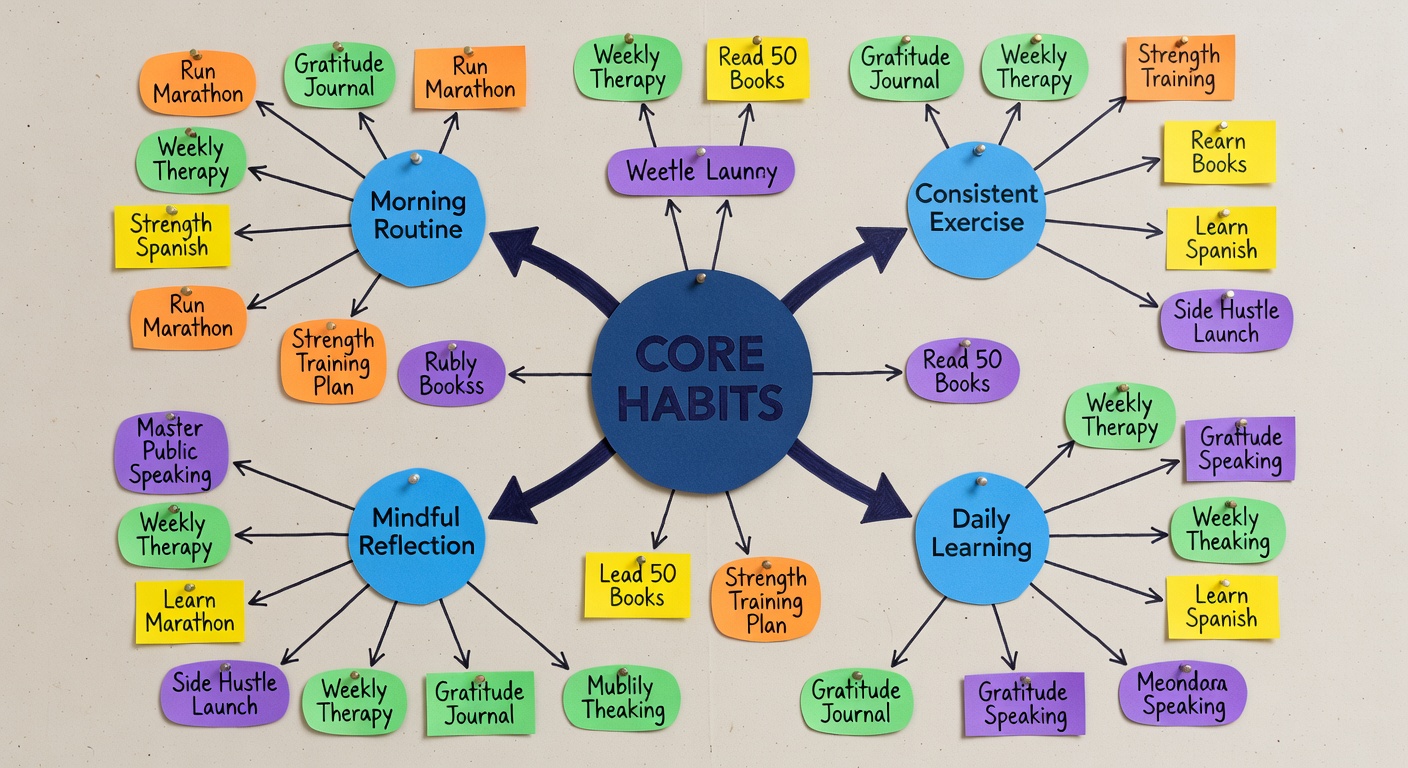
Mapping Your Goals to Daily Habits

Every long-term goal can be broken down into daily habits. By working backwards from your goal, you can identify exactly which daily behaviours — which habit loops — will compound into the outcomes you want.

Goal: Read more books → Daily habit: Read 10 pages after dinner (cue: dinner ends → routine: read → reward: satisfaction + mental stimulation).

Use a mind map or our goal breakdown template to trace the path from your desired outcome to the specific daily actions that build it.

Mind map connecting goals to daily habit loops

"The habit loop — cue, routine, reward — is at the core of every behaviour. Change the routine and you change the habit."

— Charles Duhigg, The Power of Habit